H₂S
Hydrogen sulphide
- 1,000 to 6,000 ppm typical, up to 2% vol
- Corrodes engines, boilers and pipework
- Forms sulphuric acid in condensate
- Biological scrubbing or activated carbon
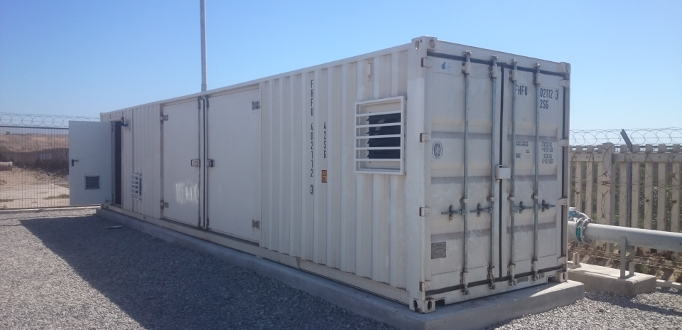
Biogas and landfill gas always contain hydrogen sulphide. It is usually in the range of 1,000 to 6,000 ppm but may reach 2% by volume, 20,000 ppm, or more. Ammonia and silicone compounds add to the problem. All three attack engines, boilers and catalysts and must be reduced before the gas is used.
For smaller contamination levels, or as a final polishing stage, the gas is routed through a bed of activated carbon. Contaminants and impurities are exposed to the filter media and captured through the adsorption process. Renew sizes vessels and carbon grades to the specific contaminant profile from your gas analysis, and supplies replacement media.
Where hydrogen sulphide levels are high, biological desulphurisation is the preferred non-chemical approach. A limited amount of air, 10 to 15% relative to the gas throughput, is injected into the process. Bacteria of the genus Thiobacillus convert the H₂S to elemental sulphur and sulphuric acid, which are drained away with the condensate.
The bacteria need three things to thrive: oxygen, added nutrients and trace elements, and a surface to grow on. Renew provides all three, either inside the gas holder using sulphur-removal netting or in a dedicated external scrubber column.
| Contaminants | H₂S, NH₃, siloxanes and other impurities |
|---|---|
| Inlet H₂S | 1,000 to 20,000+ ppm |
| Processes | Activated carbon adsorption, biological desulphurisation |
| Air injection | 10 to 15% of gas throughput (biological) |
| Bacteria | Thiobacillus spp. |
| Formats | In-holder netting, external columns, carbon vessels |
| Consumables | Carbon media and nutrient supply |
What we remove
H₂S
NH₃
Si
In the field
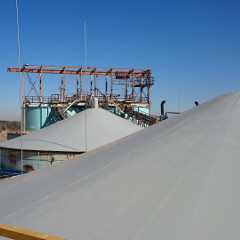
A complete biogas train for an anaerobic digestion plant: roofs, buffer storage, chilling, boosting and flaring.
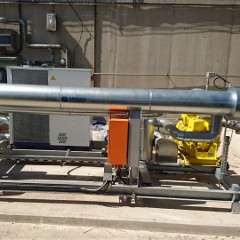
A de-humidification and boosting skid pushing brewery biogas one kilometre to the boiler house.
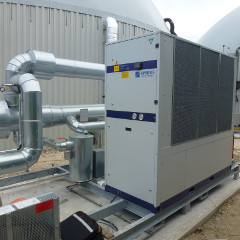
Gas chilling for a 2,000 Nm³/h landfill-gas-to-electricity plant in Johannesburg.
Share your gas flow, composition and end use and we will size the right equipment and tell you what it will cost to run.